Himpogot: The Kadazan-Dusun Silver Coin Belt
What is a himpogot?
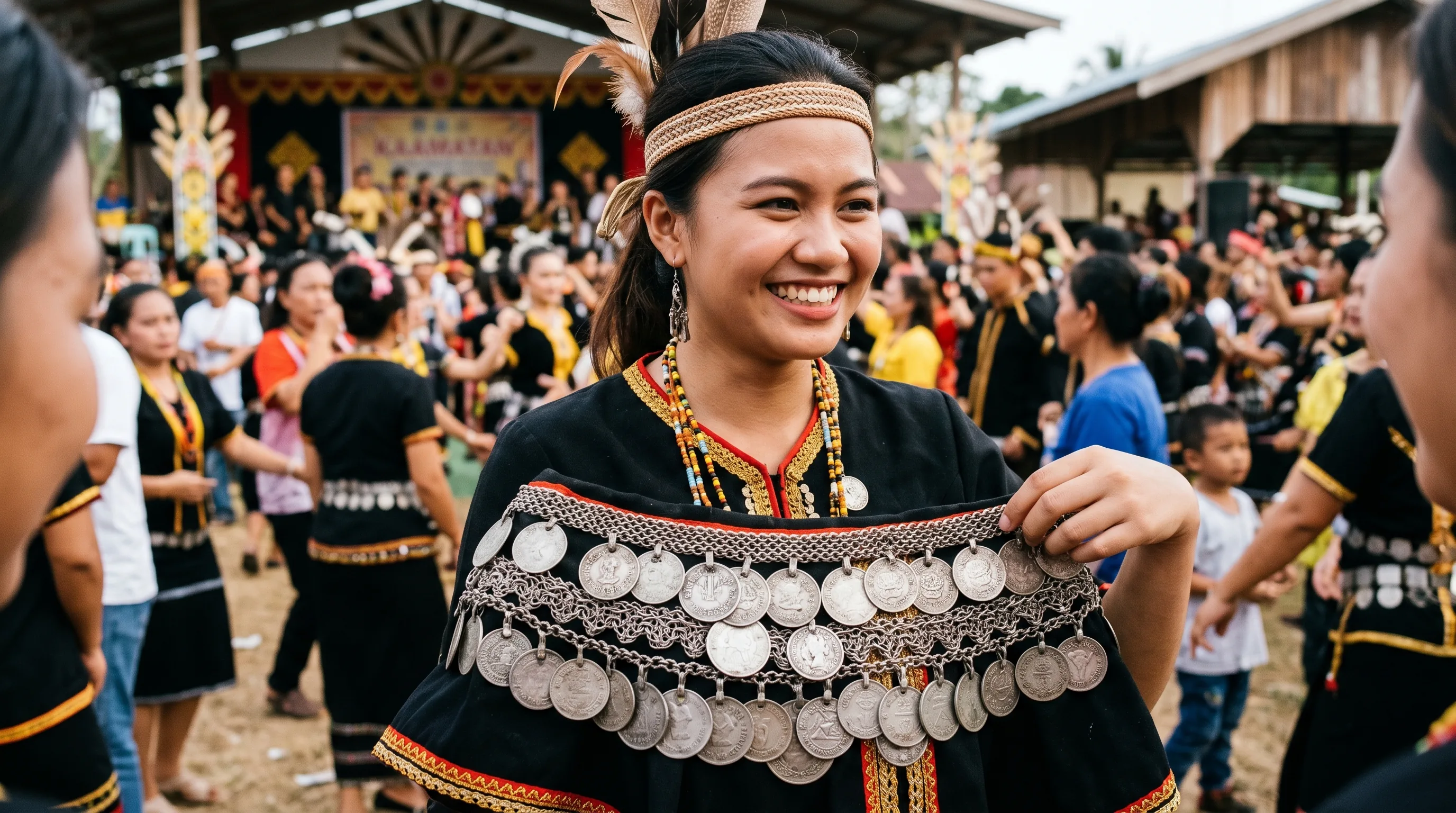
The himpogot is the Kadazan-Dusun silver coin belt worn by women, especially at the Kaamatan harvest festival. Made from 18 or more British colonial silver coins, a full set weighs about 1.5 kg and is worn over the sinuangga costume as a sign of wealth and status.
What is the himpogot
The himpogot is the silver belt of the Kadazan-Dusun, Sabah's largest indigenous community. It is worn by women, most prominently during the Kaamatan harvest festival, the cultural high point of the Kadazan-Dusun year.
More than a piece of jewellery, the himpogot is a statement. Made from real silver coins and worn across the hips over traditional dress, it signals wealth, social status and femininity. It is an instantly recognisable part of Kadazan-Dusun women's traditional costume.
This page covers what the himpogot is made from, how heavy a full set is, what it costs new and antique, what it symbolises and how it is worn, and why collectors value these belts beyond their craft.
Made from silver colonial coins
The himpogot is built from real silver coins. Historically, these were British colonial coins, with King George V era coins being the most common. The use of genuine silver currency is central to both the appearance and the meaning of the belt — it literally wears wealth around the waist.
Because the coins are authentic colonial-era silver, the himpogot ties Kadazan-Dusun craft to a specific historical period of currency. The coins are assembled into a belt form, retaining their character as recognisable silver coinage while becoming part of a single ornamental piece.
The coins most commonly used in a traditional himpogot are British colonial silver coins from the King George V era. Their authenticity is what distinguishes a genuine antique belt from a modern reproduction.
Weight and what a full set contains
A full himpogot is a substantial object. A complete set uses 18 or more British silver coins, and a complete traditional belt weighs around 1.5 kg. That weight reflects the quantity of real silver involved.
The number of coins and the overall weight are part of what makes the himpogot read as a sign of wealth: a heavier, fuller belt represents more silver. Worn across the hips, the set is both visually impressive and physically present, befitting its role as a centrepiece of formal Kadazan-Dusun dress.
What a himpogot costs
Prices for a himpogot vary widely depending on whether the coins are genuine antiques or modern reproductions:
| Type | Coins | Price per set |
|---|---|---|
| Antique | Genuine colonial-era silver coins | RM1,000+ |
| New reproduction | Silver-plated coins | RM90–200 |
An antique himpogot, made with authentic colonial-era coins, starts at RM1,000 or more per set. A new reproduction, using silver-plated coins instead of solid silver, is far more affordable at roughly RM90 to RM200 per set, making the look of the himpogot accessible to those who want it for performance or display.
Symbolism and how it is worn
The himpogot carries clear symbolism. It represents wealth, social status and femininity, and it is worn across the hips over traditional costume. The placement and the visible silver together convey standing within the community.
In dress terms, the himpogot is worn with the sinuangga — the black costume with gold brocade panels — as part of Kadazan-Dusun women's traditional attire. The dark sinuangga and the gleaming silver belt complement each other, completing the formal look most associated with Kaamatan.
Numismatic value for collectors
Beyond its place as a craft and costume piece, the himpogot has a second dimension of value. Because it is made from genuine colonial-era silver coins, the coins have numismatic value beyond the craft itself.
This means collectors also buy these belts for the coins, not only for the assembled ornament. An antique himpogot is therefore prized on two fronts at once: as a piece of Kadazan-Dusun heritage, and as a source of historical silver coinage sought by numismatists.