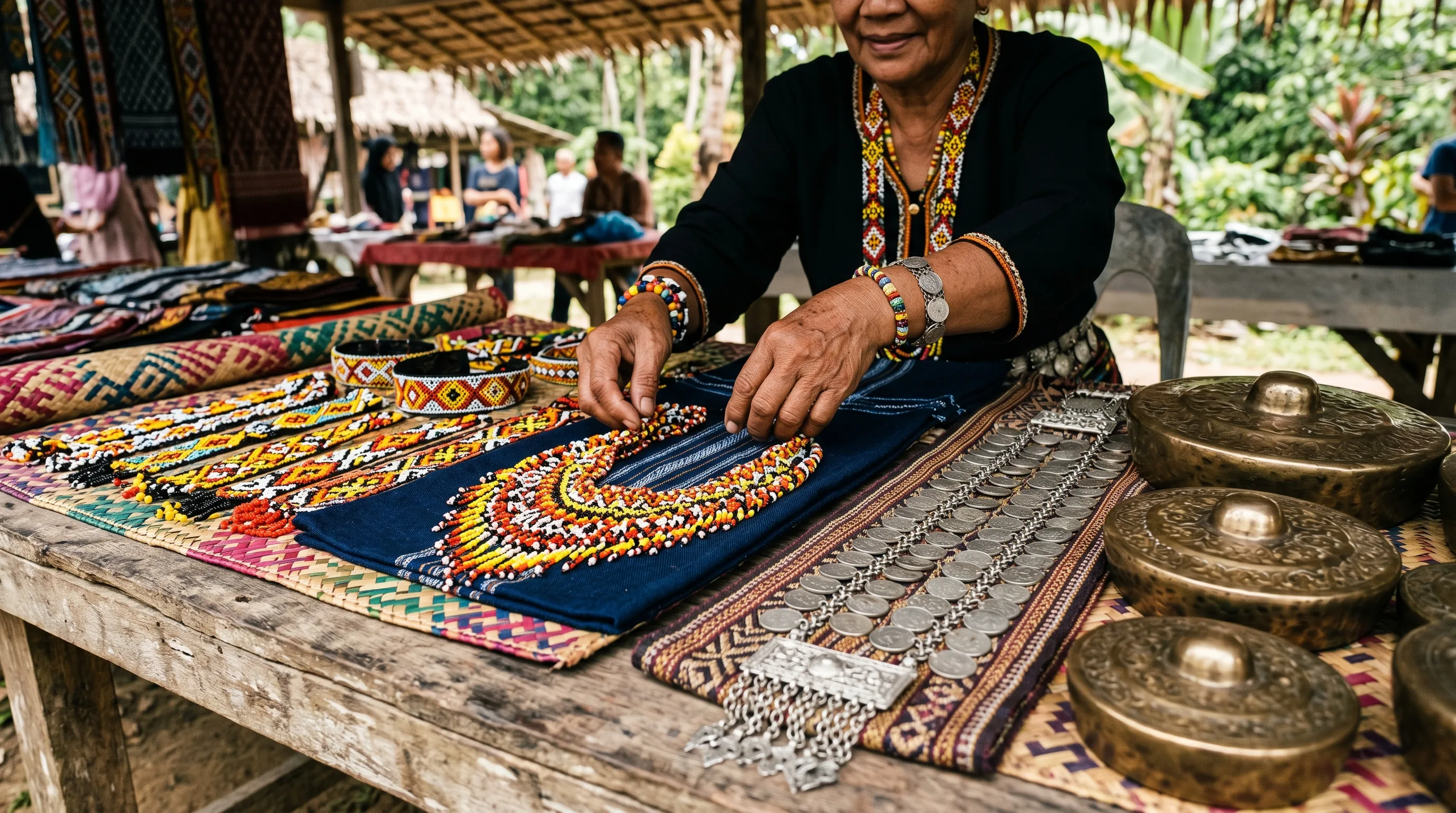
Arts & Crafts of Sabah: Beadwork, Music & Galleries
What are the traditional arts and crafts of Sabah?
Sabah's traditional arts and crafts include Rungus pinakol beadwork, the Kadazan-Dusun himpogot silver belt, kulintangan bronze gong music, mengkuang pandanus weaving, and a visual arts scene anchored by the Sabah Art Gallery and the Gaya Street Sunday Market.
Sabah's arts and crafts at a glance
Sabah's craft heritage is rooted in its 80-plus ethnic communities, each with its own materials, motifs and techniques. The Rungus of the north are renowned bead weavers; the Kadazan-Dusun adorn their festival costumes with silver; coastal Bajau and Suluk communities and interior peoples share a sophisticated bronze gong music; and weavers across the state turn pandanus leaves into mats, baskets and hats.
Alongside these living traditions, Sabah has a growing contemporary art scene, with the award-winning Sabah Art Gallery and internationally collected artists. This hub links detailed guides to each craft and to the best places to see and buy them.
Beadwork and adornment
Two of Sabah's signature traditions are worn rather than displayed. Rungus pinakol beadwork uses off-loom weaving to build geometric patterns — human figures, flowers, spears and river creatures — into necklaces, headdresses and belts. The Kadazan-Dusun himpogot is a belt of real silver coins worn by women over traditional costume, especially at the Kaamatan harvest festival, signalling wealth and status.
Music and woven crafts
Sabah's most celebrated musical tradition is kulintangan, played on rows of bronze gongs in interlocking rhythms shared across the Sulu Archipelago and Borneo. In the home and the market, mengkuang weaving turns dried, dyed pandanus leaves into more than 70 documented products — mats, baskets, hats and bags — through herringbone and diamond plaiting, sustaining a cottage industry across coastal communities.
Galleries and markets
The Sabah Art Gallery in Kota Kinabalu — the first green-rated building in Borneo — holds more than 3,000 works and stages a dozen exhibitions a year, championing Sabahan artists including the internationally collected Yee I-Lann. For traditional crafts, the Gaya Street Sunday Market is the state's largest weekly showcase, where beadwork, brassware, bamboo goods and textiles sit alongside food and produce.
Explore the arts and crafts guide
Rungus Pinakol Beadwork
Off-loom bead weaving with four traditional motifs, from Kudat and Kota Marudu
Read guide → Craft · SilverworkHimpogot Silver Belt
The Kadazan-Dusun coin belt, its colonial silver coins and value guide
Read guide → Music · GongsKulintangan Gong Music
Bronze gong ensembles and their place in maritime Southeast Asian music
Read guide → Craft · WeavingMengkuang Weaving
Pandanus leaf mats, baskets and hats, a living cottage industry
Read guide → Visual arts · GallerySabah Art Gallery
Borneo's first green building, 3,000+ works and artist Yee I-Lann
Read guide → Market · SundayGaya Street Sunday Market
KK's weekly market for crafts, food and souvenirs, 6am to 1pm
Read guide →Buying Sabah crafts responsibly
Buying directly from artisans and recognised craft outlets keeps these traditions alive and ensures makers are fairly paid. Ask about provenance — genuine antique himpogot coins, for example, command very different prices from silver-plated reproductions — and treat ceremonial pieces with respect for their cultural meaning.
Head to the Gaya Street Sunday Market and the KDCA cultural village in Penampang for beadwork and weaving, and visit the Sabah Art Gallery for contemporary work. Buying from makers and established stalls supports the communities who keep these crafts going.