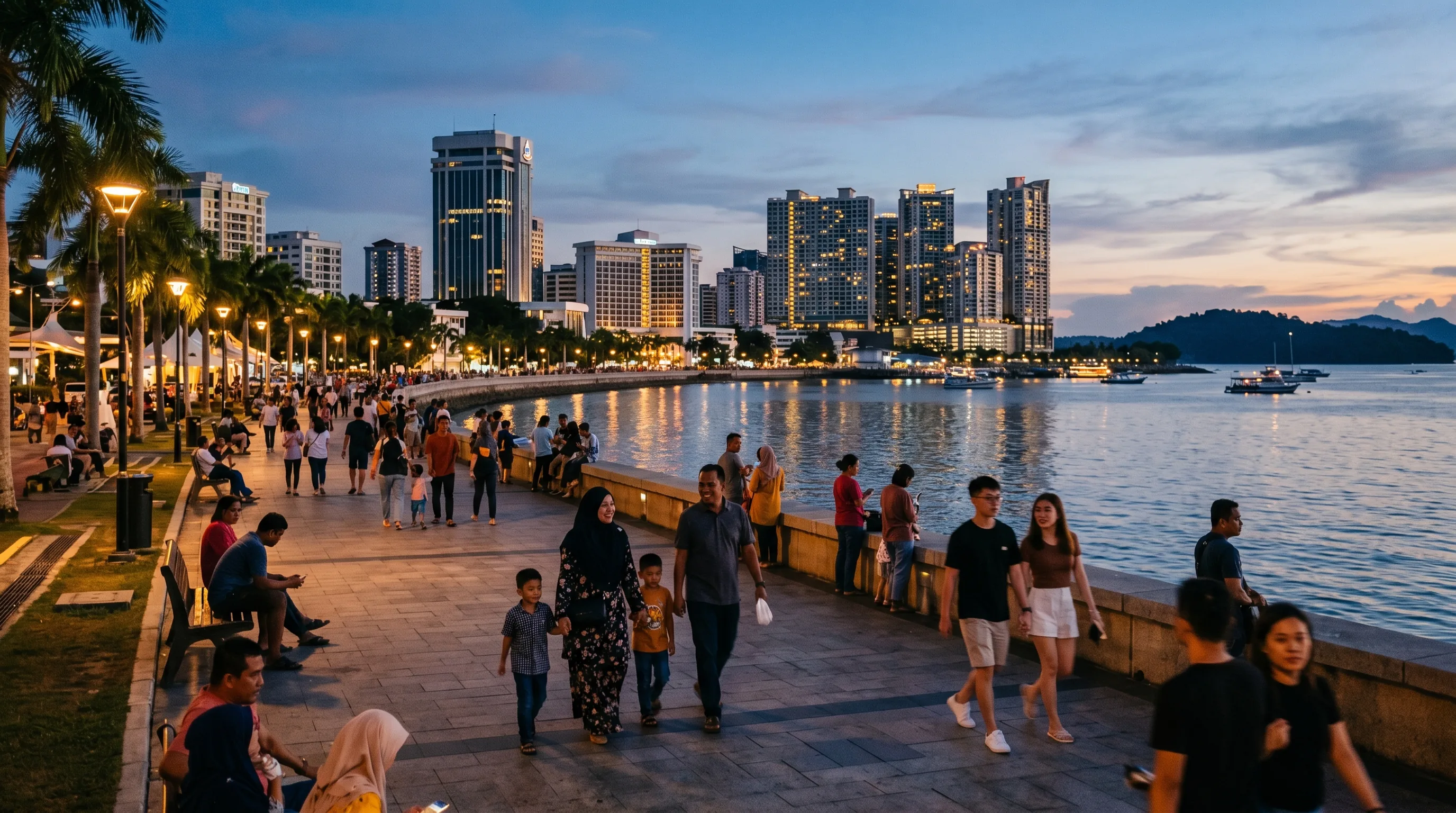
KK2035 Master Plan: Kota Kinabalu City Vision 2035
What is the KK2035 master plan?
KK2035 is the Kota Kinabalu City Development Plan 2035, launched by DBKK on 3 November 2023. It aims to transform Kota Kinabalu into a smart, sustainable and competitive city by 2035 through six development pillars.
What is KK2035?
KK2035 is the Kota Kinabalu City Development Plan 2035, a long-term blueprint for how the city should grow over the coming decade. It was officially launched on 3 November 2023 by DBKK (Dewan Bandaraya Kota Kinabalu), the city hall responsible for governing and developing Kota Kinabalu.
The vision behind the plan is to transform Kota Kinabalu into a smart, sustainable and competitive city by 2035. Rather than focusing on a single project, KK2035 sets out a coordinated framework that ties together infrastructure, the economy, heritage, the environment, society and mobility under one umbrella.
In practice, this means the master plan acts as a guiding document: individual initiatives, from digital services to major waterfront redevelopment, are aligned to a shared set of goals and a common target year. The aim is steady, joined-up progress rather than scattered, one-off developments.
The six pillars
KK2035 is built around six key pillars, each addressing a different dimension of city life. Together they give the master plan its breadth, ensuring growth is balanced across physical, economic, social and environmental needs.
- Smart City Infrastructure — using technology and data to run city services more efficiently.
- Economic Growth and Investment — strengthening the local economy and attracting investment.
- Heritage and Cultural Identity — preserving the character and history that make Kota Kinabalu distinct.
- Sustainable Environment — protecting natural assets and building in a more environmentally responsible way.
- Inclusive Society — ensuring development benefits residents broadly, not just a few.
- Urban Mobility — improving how people and goods move around the city.
By holding these six themes together, KK2035 tries to avoid the trap of growth in one area coming at the cost of another, keeping technology, economy, culture, environment, equity and movement in balance.
The Smart City initiative
One of the most concrete strands of KK2035 is the Smart City Initiative, backed by a budget of RM300 million over five years. It is delivered by DBKK in partnership with MCMC, bringing together city governance and national communications expertise.
The initiative covers a range of digital and connected-city components:
- Smart traffic management to ease congestion and improve flow.
- City-wide CCTV for monitoring and public safety.
- An integrated emergency response platform to coordinate services more effectively.
- Digital permits and licensing via the MyKK portal, streamlining city services.
- 5G deployment across the Kota Kinabalu central business district.
The Smart City Initiative is where a high-level vision becomes something residents can use directly, whether that is applying for a permit through MyKK or benefiting from smarter traffic signals on the daily commute.
Jesselton Docklands
The flagship physical project associated with KK2035 is Jesselton Docklands, a major waterfront redevelopment carrying an investment of RM4.2 billion. It spans 35 acres of reclaimed waterfront near the Kota Kinabalu waterfront and is described as the largest urban waterfront redevelopment in Sabah's history.
The master plan for the precinct is being designed by Snohetta, the Norwegian architecture firm known for high-profile public and waterfront projects. The development is envisioned as a mixed-use precinct that combines:
- Residential towers
- Hotels
- A maritime museum
- Commercial spaces
- A public promenade
As of the 2025 to 2026 period, Jesselton Docklands is in its detailed planning and approval phase. Once realised, it is intended to give Kota Kinabalu a signature waterfront district blending living, leisure, culture and commerce in one location.
Who is delivering it
The overall KK2035 master plan is led by DBKK (Dewan Bandaraya Kota Kinabalu), the city hall that governs Kota Kinabalu. As the governing body, DBKK sets the vision, coordinates the pillars and oversees how individual projects fit into the wider plan.
Within specific initiatives, DBKK works alongside partners suited to each task:
- MCMC partners with DBKK on the Smart City Initiative, supporting connectivity and digital infrastructure such as 5G.
- Snohetta, the Norwegian architecture firm, serves as the master plan designer for Jesselton Docklands.
This mix of a central governing body and specialist partners reflects the structure of the plan itself: a single coordinating vision under DBKK, delivered through targeted collaborations on each major component.
What it means for residents
For people living in Kota Kinabalu, KK2035 is intended to shape day-to-day life across many fronts rather than in a single visible project.
Some of the changes residents may notice over the coming years include:
- Easier city services through digital permits and licensing on the MyKK portal.
- Smoother travel as smart traffic management and urban mobility improvements take hold.
- Improved safety and response via city-wide CCTV and an integrated emergency response platform.
- New public spaces such as the promenade and maritime museum planned at Jesselton Docklands.
By keeping heritage, inclusivity and the environment among its six pillars, the plan also signals an intent to grow the city while protecting its character and ensuring the benefits are shared widely, positioning Kota Kinabalu as a smart and sustainable city by 2035.