SAWO: Sabah Women's Action-Resource Group
What is SAWO and what does it do?
SAWO, the Sabah Women's Action-Resource Group, was founded in 1985 to combat violence and injustice against women and children. It has driven awareness campaigns, supported law reform, helped set up crisis services and runs grassroots outreach across Sabah.
SAWO at a glance
The Sabah Women's Action-Resource Group, known as SAWO, has worked for women and children in Sabah since 1985. Its mission is to combat violence and injustice against women and children, an aim it has pursued through advocacy, campaigns and direct support.
Over the decades, SAWO has played a part in major changes, from public awareness campaigns to contributions to national law reform and the creation of crisis support services. Today its work continues at the grassroots level, reaching communities across the state.
Founded in 1985, SAWO works to combat violence and injustice against women and children through campaigns, law reform support, crisis services and rural outreach.
Founding and mission
SAWO was founded in 1985 as a dedicated voice for women and children in Sabah. From the outset, its mission has been to combat violence and injustice against women and children, addressing problems that were often hidden or under-acknowledged at the time.
By organising around these issues, SAWO helped bring questions of women's safety and rights into wider public discussion. Its early work laid the groundwork for the campaigns and services that would follow in the years ahead.
Campaigns and law reform
SAWO has a long record of advocacy. It launched a national violence-against-women (VAW) campaign in September 1986, helping to raise awareness of an issue that had often gone unspoken.
Its advocacy also fed into legal change. SAWO helped influence rape law reforms in 1989 through the JAG coalition, and contributed to the enactment of the Domestic Violence Act in 1994, a landmark in protecting survivors.
SAWO's work shows how sustained campaigning can move an issue from public awareness toward concrete legal protection.
Support services and crisis care
Alongside campaigning, SAWO helped build practical support for survivors. It established the first One-Stop Crisis Centre (OSCC) at Queen Elizabeth Hospital in Kota Kinabalu, creating a coordinated point of help for those affected by violence.
SAWO also ran the first VAW helpline in Sabah, offering a direct channel for women and children seeking information or assistance. Together, these services turned advocacy into accessible, on-the-ground support.
Such facilities remain an important model for responding to violence in a sensitive and coordinated way.
Grassroots outreach today
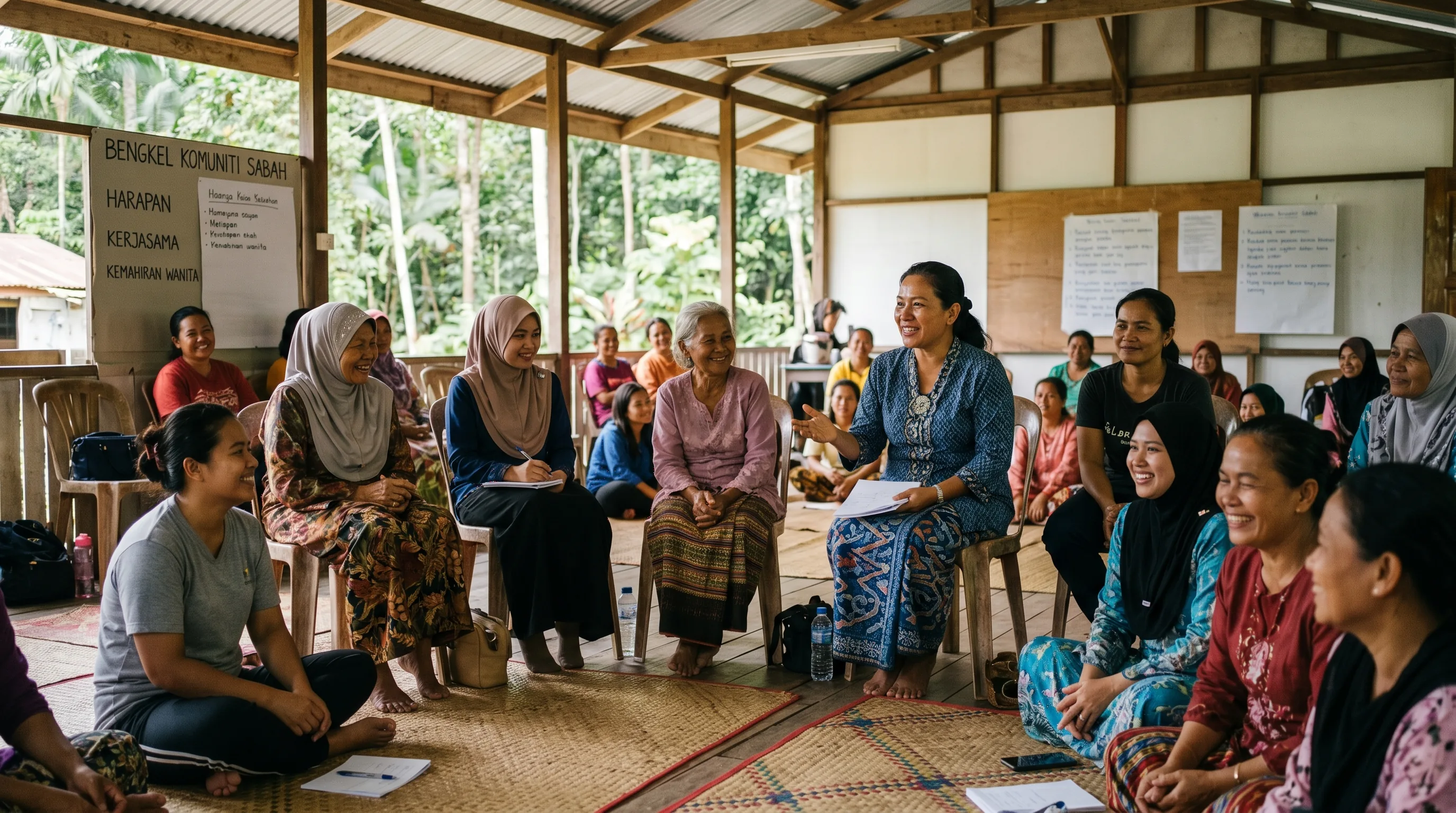
SAWO continues to work close to communities through grassroots outreach in rural areas. Reaching beyond cities is important in a state where many people live in smaller towns and villages, sometimes far from formal services.
A notable part of this work is training village heads, imams and priests as informal mediators. By equipping trusted community figures, SAWO helps ensure that women and children can find understanding and support within their own communities.
This approach reflects an understanding that lasting change depends on local leadership and trust.
How to connect with SAWO
SAWO maintains an online presence for those who want to learn more or seek support. Its website is sawo.org.my, where information about its work and services can be found.
The group is also active on social media, including its Instagram account @sawo.sabah. These channels make it easier for women, families and supporters across Sabah to stay connected with its campaigns and outreach.
For anyone interested in women's and children's welfare in Sabah, these are useful starting points.