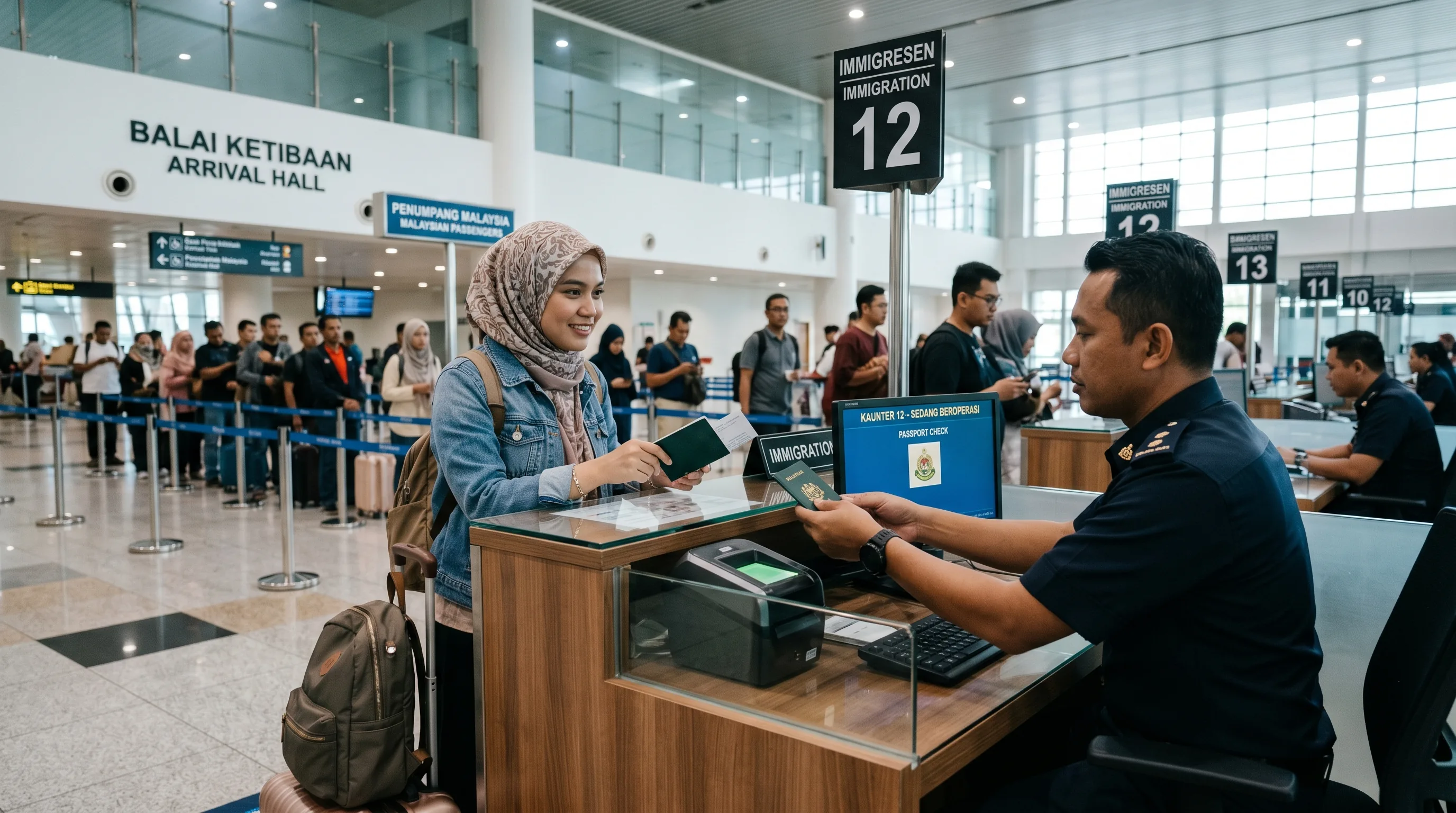
Sabah Immigration: Entry, Passports & Work Passes
Why does Sabah have its own immigration control?
Under Article 161E of the Malaysian Constitution and Sabah's 1963 terms of entry into Malaysia, Sabah keeps its own immigration powers and border controls. In practice this means even citizens from Peninsular Malaysia and Sarawak must show a passport or identity card and clear an immigration formality to enter Sabah, and foreigners receive a separate Sabah entry endorsement.
Sabah's autonomy over immigration
One of the most noticeable ways Sabah differs from the rest of Malaysia is that it runs its own immigration control. This autonomy has a constitutional basis: Article 161E of the Malaysian Constitution, together with Sabah's terms of entry into Malaysia in 1963, preserves the state's immigration powers. As a matter of law, Sabah keeps its own immigration border controls separate from the Peninsular borders.
The point here is purely factual and constitutional. Sabah did not simply adopt a single, federal immigration system; instead, the arrangements made when Sabah joined Malaysia allowed it to retain control over who enters the state. For travellers, residents and workers, this autonomy is not an abstraction — it shapes the documents you carry, the checks you pass through, and even which professionals can practise in the state.
This page explains Sabah's immigration arrangements in plain terms for general understanding only. It is not legal advice and does not cover the politics of migration. Entry rules, work-pass conditions and professional admission requirements change, so for your specific situation consult a qualified Sabah-admitted lawyer or the Sabah Immigration Department (Jabatan Imigresen Sabah) directly.
Entering Sabah in practice
For most Malaysians, the autonomy becomes real at the point of arrival. Citizens of Peninsular Malaysia and Sarawak require a valid passport or identity card, plus an immigration formality, to enter Sabah. In other words, travelling from Kuala Lumpur to Kota Kinabalu is not treated exactly like a domestic hop within the Peninsula — there is an immigration step on entry into Sabah.
This happens because Sabah maintains its own immigration border controls, separate from the Peninsular borders. The practical advice that follows is simple: when flying into Sabah, carry valid travel documents and be ready to clear immigration, just as you would when crossing into a jurisdiction that manages its own entry. It is one of the first things visitors notice and a direct consequence of the state's immigration autonomy.
Foreign visitors and Sabah endorsements
The same autonomy affects foreign visitors. A foreigner entering via Kota Kinabalu receives a separate Sabah entry endorsement, which is different from a Peninsular entry. Because Sabah controls its own immigration, entry into the state is recorded in its own right rather than simply carried over from an arrival elsewhere in Malaysia.
For international travellers this is mostly a matter of awareness: the endorsement you receive on entering Sabah is specific to Sabah, and the conditions attached to it are administered by Sabah's immigration authorities. Visitors planning to move between Peninsular Malaysia and Sabah should be mindful that each entry into Sabah is treated distinctly, and should keep their documents and endorsements in order accordingly.
Professionals and the Sabah Bar
Sabah's distinct legal framework reaches into the professions as well. Some professionals registered in Peninsular Malaysia — for example lawyers and engineers — cannot automatically practise in Sabah. Registration in one part of Malaysia does not, by itself, grant the right to practise across the whole country.
The clearest example is the legal profession: Sabah-registered lawyers must be admitted to the Sabah Bar separately from the Malaysian Bar. A practitioner cannot assume that admission in the Peninsula carries over to Sabah; a distinct admission process applies. For anyone planning to work in a regulated profession in Sabah, the safest approach is to confirm the specific Sabah registration or admission requirements with the relevant professional body before relying on a Peninsular qualification.
Work passes and the PLKS
Sabah also administers its own system for documented migrant workers. The PLKS (Pas Lawatan Kerja Sementara) is Sabah's temporary work pass system, and it regulates documented migrant workers across a range of sectors — including palm oil plantations, construction, manufacturing and domestic work. The PLKS is administered by the Sabah Immigration Department (Jabatan Imigresen Sabah), in keeping with the state's control over immigration.
Migrant workers are a significant part of Sabah's workforce, particularly in the labour-intensive sectors named above. For employers and workers alike, the PLKS is the formal channel through which temporary work is documented and regulated in the state. Because pass conditions and procedures are set and updated by the Sabah Immigration Department, anyone hiring or working under the PLKS should confirm the current requirements directly with the department rather than relying on general descriptions.