Sabah Renewable Energy: Targets, Solar & Hydropower
What is Sabah's renewable energy plan?
Sabah targets 40% renewable energy generation by 2030. Key projects include the 13.21 MW Babagon Dam floating solar plant — Malaysia's first on a reservoir — alongside hydropower, biomass, solar farms and rooftop solar incentives.
Sabah's renewable energy target
Sabah has set a clear direction for its power sector: a target of 40% renewable energy generation by 2030. The goal is to shift the state's electricity supply toward cleaner sources while supporting reliable, long-term power for homes, businesses and industry.
Reaching that target means building out a mix of technologies — solar, hydropower and biomass — rather than relying on any single source. Sabah's natural advantages, including strong sunlight, significant river systems and a large palm oil industry, give the state several practical routes to expand renewable generation.
This page brings together the main pieces of Sabah's renewable energy picture, from a pioneering floating solar plant to longer-term frameworks for hydropower and green hydrogen.
The current energy mix
Electricity in Sabah is supplied mainly by Sabah Electricity Sdn Bhd (SESB). The grid has historically been dominated by gas-fired generation, which provides the bulk of the state's power today.
Moving toward a 40% renewable share by 2030 therefore represents a meaningful transition. It involves adding new renewable capacity to the grid and integrating variable sources — such as solar — alongside existing generation, while maintaining a stable supply across Sabah's distributed communities.
SESB is the main electricity utility for Sabah. Because the existing mix leans heavily on gas, each new renewable project — solar, hydro or biomass — contributes directly toward the state's 2030 renewable target.
Babagon Dam floating solar
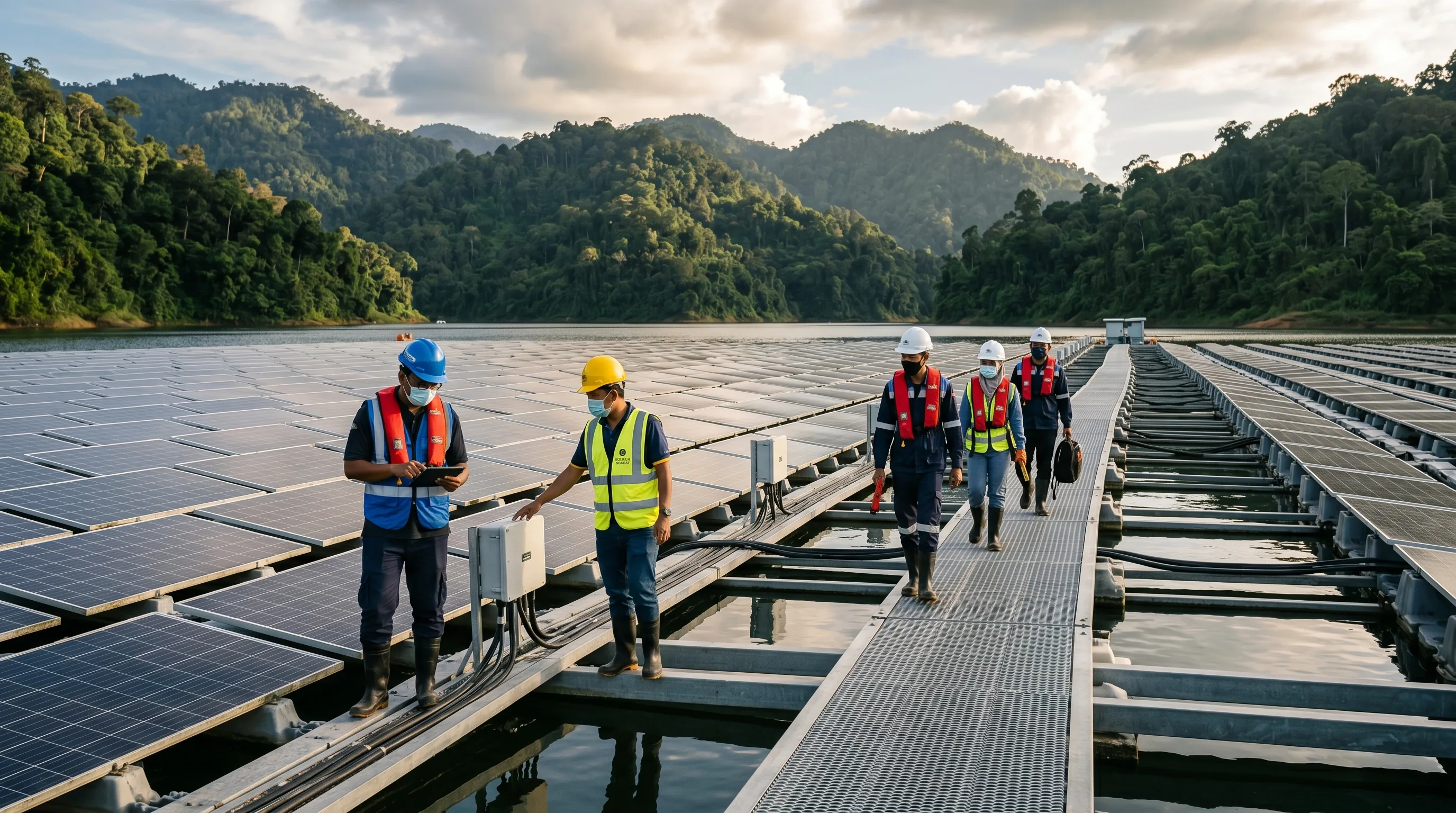
One of the most notable projects is the floating solar installation at Babagon Dam in Penampang, which is Kota Kinabalu's primary water reservoir. With a capacity of 13.21 MW, it is the first floating solar installation in Malaysia on a reservoir, developed by Tenaga Nasional Berhad (TNB) / SESB.
Floating solar places solar panels on the surface of a body of water rather than on land. On a tropical reservoir, this approach makes productive use of an existing water surface without taking up land. The Babagon project demonstrates the feasibility of floating solar on tropical reservoirs, providing real-world experience with the technology in Sabah's climate.
Crucially, Babagon is intended as a model for Sabah's other dams, including Liwagu, Paitan and Tapadong. If the approach proves effective, similar installations could be considered at these reservoirs, multiplying the contribution of floating solar to the state's renewable target.
| Detail | Babagon floating solar |
|---|---|
| Capacity | 13.21 MW |
| Location | Babagon Dam, Penampang (KK's primary water reservoir) |
| Developer | TNB / SESB |
| Significance | First floating solar on a reservoir in Malaysia |
| Model for | Liwagu, Paitan, Tapadong dams |
Hydropower potential
Sabah's rivers give the state significant hydropower potential. Among the projects being explored is a hydro project on the Papar River, which is under study. Hydropower can provide steady, dispatchable renewable electricity, complementing more variable sources like solar.
Beyond individual projects, hydropower features in Sabah's longer-term ambitions for renewable energy — including the possibility of exporting power to other parts of Malaysia, discussed further below under Sabah SCORE.
Biomass and solar farms
Sabah's large palm oil industry creates an opportunity for biomass energy. Several mills have implemented palm oil mill effluent (POME) biogas plants, which capture biogas from mill waste and convert it into energy — turning a by-product of an existing industry into a renewable resource.
On the solar side, beyond floating installations, there are grid-scale solar farm proposals for the flatlands of Kota Belud and Lahad Datu. Larger, land-based solar farms can add substantial capacity where suitable open land and strong sunlight are available.
Together, biomass and solar farms broaden Sabah's renewable base, drawing on both the state's agricultural sector and its solar resource.
Rooftop solar (POTENSI) and Sabah SCORE
Renewable energy in Sabah is not only about large projects. The POTENSI program provides government incentives for rooftop solar in residential and commercial buildings, encouraging households and businesses to generate their own clean power. Distributed rooftop solar helps spread renewable generation across the state and lets ordinary energy users take part in the transition.
Tying these efforts together is Sabah SCORE — the Sabah Corridor of Renewable Energy — a policy framework that has been established to guide the state's renewable development. Its long-term vision includes the export of hydropower to Peninsular Malaysia via an undersea cable, as well as green hydrogen production.
These longer-term goals position Sabah not just as a consumer of clean energy, but potentially as a producer and exporter — using its renewable resources to support the wider region while advancing toward its 2030 target.
If you own a building in Sabah, the POTENSI program offers incentives for installing rooftop solar — a practical way to participate in the state's renewable energy goals while reducing reliance on the grid.