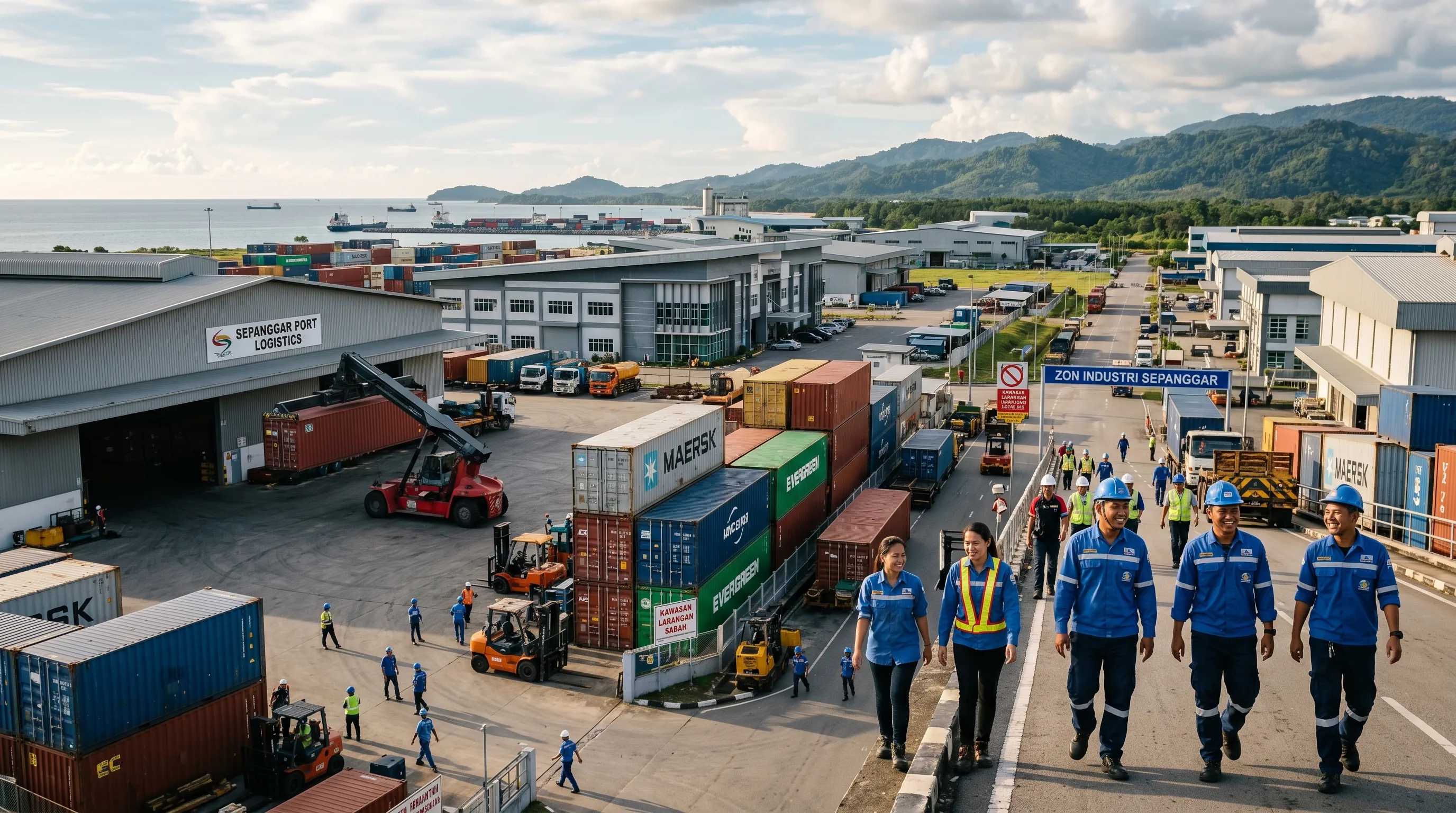
KKIP: Kota Kinabalu Industrial Park Guide
What is the Kota Kinabalu Industrial Park (KKIP)?
KKIP is Sabah's largest industrial park, spanning 8,320 acres in Sepanggar about 15 km north of Kota Kinabalu. Managed by KKIP Sdn Bhd, it hosts 341 companies and RM11.2 billion in investment across six zones.
What is KKIP?
The Kota Kinabalu Industrial Park, almost always shortened to KKIP, is the flagship industrial estate of the state of Sabah. It brings together manufacturing, heavy industry, oil and gas services, and commercial activity on a single planned site, giving the state a focal point for industrialisation outside the traditional plantation and resource economy.
The park is managed by KKIP Sdn Bhd, a subsidiary of the Yayasan Sabah Group. That structure links the park's development directly to one of the state's best-known institutions, and it means revenue and growth from the estate feed back into Sabah-owned entities rather than flowing entirely to outside operators.
Rather than being a single zone, KKIP is laid out as a cluster of specialised areas, each tailored to a different type of industry. This zoning lets heavy and potentially noisy or hazardous operations sit apart from lighter manufacturing, training facilities and commercial space, while still sharing common infrastructure such as roads, utilities and proximity to the port.
Location and size
KKIP is located in Sepanggar, around 15 kilometres north of Kota Kinabalu city centre. The position is deliberate: it places the park close to Sepanggar Bay, where Sabah's main international container port sits, and it keeps heavy industry at a sensible distance from the residential and tourist heart of the capital.
The total planned area of the park is 8,320 acres, which makes it the largest industrial park in Sabah. A park of this scale takes decades to fill, but development has been steady. As of 2025, only about 101.17 hectares of undeveloped industrial land remained, a sign that the park is approaching the limits of its current footprint.
Sepanggar combines deep-water port access at Sepanggar Bay with road links into Kota Kinabalu and the wider west coast. That mix of sea, land and proximity to the capital is what makes it the natural home for Sabah's largest industrial cluster.
The industrial zones
KKIP is divided into six specialised zones, each designed to host a particular category of activity:
- Heavy Industrial Zone — for large-scale and resource-intensive manufacturing and processing.
- Light and Medium Industrial Zone — for smaller manufacturers, assembly and fabrication firms.
- Oil & Gas Zone — located at Sepanggar Bay, serving the energy sector and its service contractors.
- Halal Hub — dedicated to halal-certified production for domestic and export markets.
- Education and Training Zone — home to skills and vocational training facilities.
- Commercial Zone — for offices, services and supporting commercial activity.
Grouping industries this way keeps compatible activities together and lets the park provide the right infrastructure for each. The Oil & Gas Zone's position at Sepanggar Bay, for example, gives energy-sector tenants direct access to the waterfront, while the Education and Training Zone keeps workforce development close to the employers who need it.
Investment and jobs
The clearest measure of KKIP's role in the Sabah economy is the cumulative activity it has attracted. The figures below reflect the park's standing as of 2025:
| Indicator | Cumulative figure (2025) |
|---|---|
| Companies invested | 341 |
| Jobs created | 14,608 |
| Total investment | RM11.2 billion |
| Undeveloped industrial land remaining | 101.17 hectares |
Taken together, these numbers show a mature, largely built-out estate. With 341 companies invested and more than 14,000 jobs supported, KKIP functions as a significant employment centre for the Kota Kinabalu region. The relatively small amount of undeveloped land remaining underlines how far the park has come from its early years.
Key tenants
KKIP hosts a mix of multinational names and local manufacturers. Among the better-known tenants are Shell and Lafarge, alongside Petronas-related contractors and a range of manufacturing firms spread across the park's industrial zones.
The presence of energy majors and their service contractors reflects the importance of the Oil & Gas Zone at Sepanggar Bay, while building-materials and general manufacturing tenants make use of the heavy, light and medium industrial areas. This combination gives the park a diversified base rather than a dependence on any single sector.
Skills and training
An industrial park is only as strong as the workforce that staffs it, and KKIP addresses this directly through the Sabah Skills Development Centre (SSDC), which operates within the park. The SSDC provides vocational training aligned to the industries based at KKIP, helping ensure a local supply of skilled workers for tenant companies.
Keeping training inside the park, within the Education and Training Zone, creates a practical link between employers and the courses on offer. For Sabahans, it means opportunities to build technical skills close to where the jobs are, supporting the wider goal of turning industrial investment into long-term local employment.