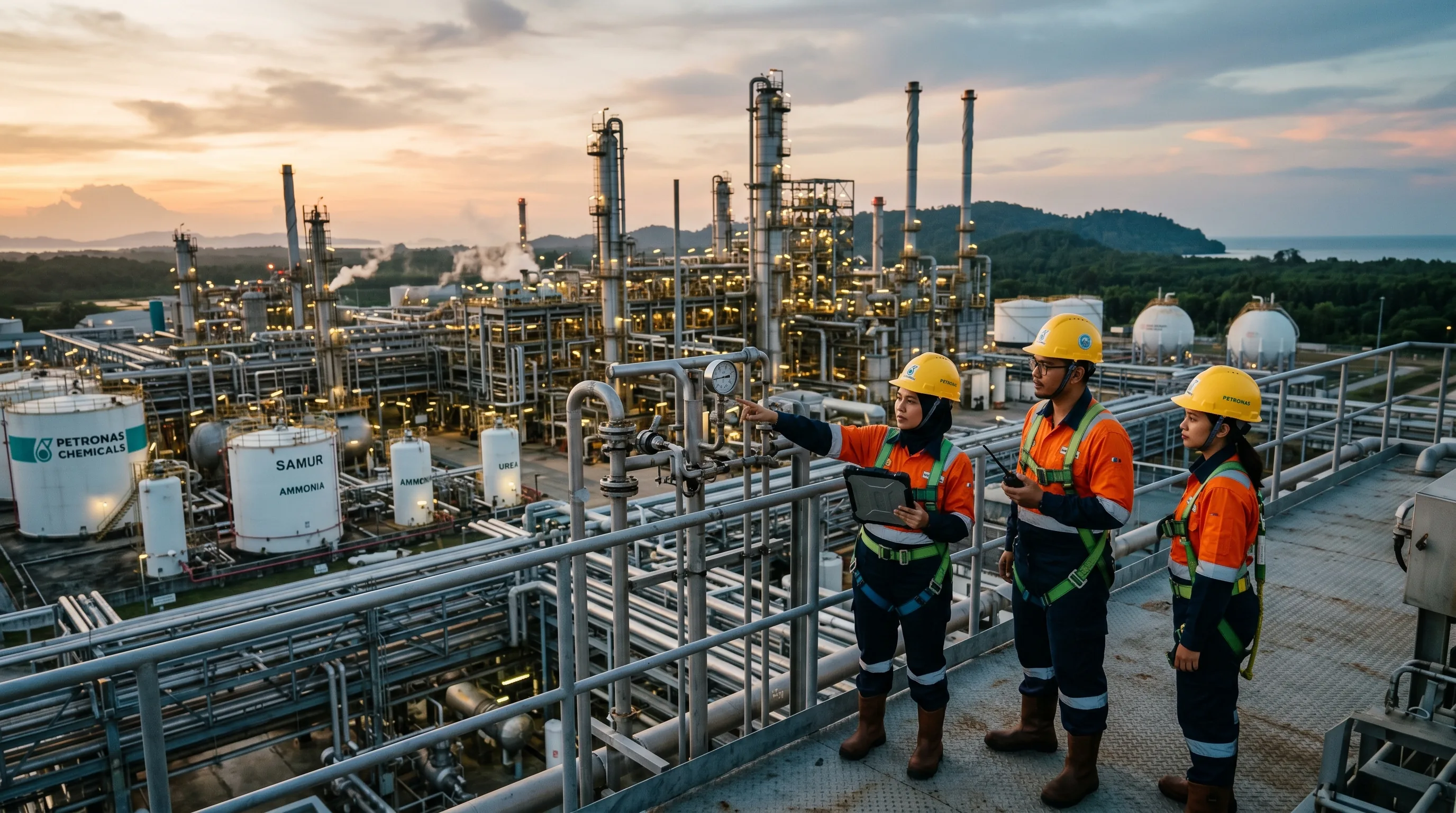
SOGIP and the SAMUR Plant in Sipitang
What are SOGIP and the SAMUR plant?
SOGIP is Sabah's oil and gas industrial area in Sipitang, covering 5,539 acres. Its anchor project is the RM8.88 billion SAMUR plant, launched in February 2025, which turns natural gas from offshore fields into ammonia and urea fertilizer.
What is SOGIP?
SOGIP stands for the Sipitang Oil & Gas Industrial Area. It is a large, dedicated industrial park built to host downstream oil and gas industries — that is, businesses that take raw oil and gas and turn them into higher-value products such as fertilizers, chemicals and fuels.
Covering a total area of 5,539 acres, SOGIP gives Sabah a base for adding value to the natural gas produced off its coast, instead of simply shipping that gas out in raw form. By clustering related industries together on one site, the area can share infrastructure such as gas supply, power and logistics.
The centrepiece of SOGIP is the SAMUR plant, but the area is designed to support a broader family of gas-related industries. This makes SOGIP one of the most strategically important industrial developments in the state, tying together Sabah's natural resources, its energy partners and its long-term economic ambitions.
Where it is and how it is supplied
SOGIP is located in the Sipitang district, in the southwest of Sabah. Siting the area here connects it to the infrastructure that moves the state's gas onshore and makes the gas available to industry.
The area is connected to the SOGT, the Sabah-Sarawak Gas Pipeline, and to the state's offshore fields via the Kimanis Gas Terminal. This pipeline-and-terminal network is what allows SOGIP's industries to receive a steady feedstock of natural gas drawn from Sabah's own offshore production.
By piping offshore gas into Sipitang and processing it there, SOGIP keeps more of the value chain inside Sabah. Raw gas becomes fertilizer, chemicals and fuels — products worth far more than the gas alone — supporting local industry and jobs.
The SAMUR ammonia-urea plant
The anchor project at SOGIP is SAMUR, short for Sabah Ammonia Urea. It is a major industrial facility costing RM8.88 billion, equivalent to roughly USD 2 billion, and it was launched in February 2025.
SAMUR was developed as a partnership between Yayasan Sabah, PETRONAS and Sarawak-based investors, combining state, national-energy and regional capital in a single project. That mix reflects how significant the plant is, not just for Sipitang but for the wider Borneo economy.
The plant draws its feedstock of natural gas from Sabah's offshore fields, delivered through the Kimanis Gas Terminal. In effect, SAMUR is the engine that turns the state's offshore gas into solid, exportable products, making it the clearest example of the value-adding role that SOGIP was created to play.
What SAMUR produces and why
SAMUR produces two main products: ammonia and urea. Both have important agricultural and industrial uses, with urea in particular being one of the world's most widely used nitrogen fertilizers, essential for crop production.
There is a clear market logic behind the plant. Malaysia imports around 1 million metric tonnes of urea every year, so domestic production at SAMUR helps substitute for those imports and shore up the country's fertilizer supply. Beyond the home market, the plant is also positioned to export to Southeast Asia.
| Aspect | Detail |
|---|---|
| Products | Ammonia and urea |
| Uses | Agricultural and industrial |
| Feedstock | Natural gas from Sabah offshore fields (via Kimanis terminal) |
| Domestic context | Malaysia imports ~1 million MT of urea per year |
| Markets | Domestic fertilizer supply plus export to Southeast Asia |
Other SOGIP industries
While SAMUR is the flagship, SOGIP is designed to host a wider cluster of gas-related downstream industries. The area's activities extend to:
- LNG condensate processing — handling liquids that come with natural gas production.
- Methanol production — another chemical made from natural gas with many industrial uses.
- Power generation — using gas to produce electricity for industry and the grid.
- Storage and logistics hub — facilities for holding and moving products and feedstock.
This range of industries is what makes SOGIP a true industrial area rather than a single plant. Each activity adds another layer of value to the gas flowing in from offshore, and together they create a more diversified and resilient industrial base in Sipitang.
Economic significance
SOGIP and the SAMUR plant represent a deliberate strategy to industrialise Sabah's natural gas resources within the state. Rather than exporting raw gas, the area captures more of the value chain locally, turning gas into fertilizer, chemicals, fuels and electricity.
The SAMUR plant alone, with its RM8.88 billion price tag and February 2025 launch, is one of the largest industrial investments in Sabah's history. Its role in reducing Malaysia's reliance on imported urea and opening export routes into Southeast Asia gives it national and regional importance, while the broader SOGIP cluster anchors long-term industrial activity in the southwest of the state.